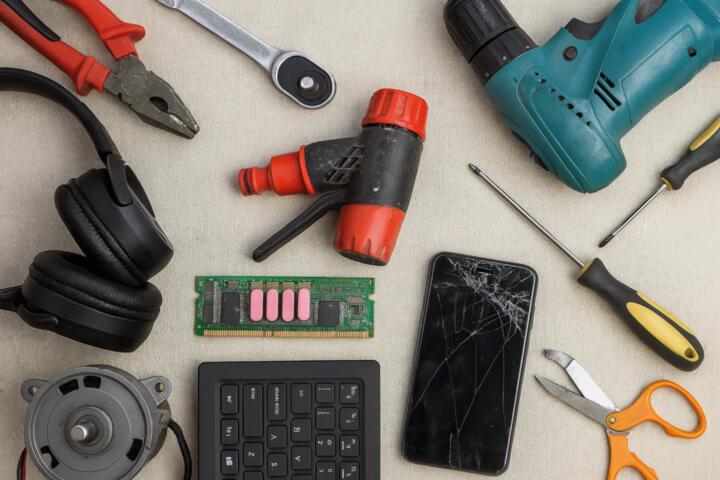
The Maintenance Paradigm
Repair is no longer just a hobby; it is a critical financial and environmental strategy. In an era where the average smartphone is replaced every 2.5 years and fast fashion garments are worn only seven times, mastering the "Right to Repair" creates a significant edge. True expertise lies in understanding the failure points of specific materials, from the lithium-ion degradation in a MacBook to the structural fatigue of Goodyear-welted footwear.
Practically, this looks like choosing products with high "Repairability Scores" (a metric popularized by iFixit). For example, a laptop with modular RAM and SSD slots can remain high-performing for eight years, whereas a soldered equivalent becomes e-waste the moment a single chip fails. Data from the European Environmental Bureau shows that extending the life of all washing machines by just five years would save as much carbon emissions as taking 500,000 cars off the road annually.
Industry leaders like Patagonia through their "Worn Wear" program have proven that repair increases brand loyalty. They process over 100,000 repairs a year, demonstrating that even premium technical gear is a long-term investment rather than a disposable commodity. Shifting your mindset from "consumer" to "steward" changes how you interact with every object in your household.
Common Ownership Failures
The most frequent mistake is the "wait-until-it-breaks" approach. Neglecting preventative maintenance leads to catastrophic failure. For instance, allowing dust to accumulate in a gaming console's heat sink causes thermal throttling, which eventually desolders the GPU due to excessive heat cycles. This turns a $10 cleaning task into a $500 replacement.
Another pain point is the use of substandard replacement parts. Using a $15 third-party lithium battery in an iPhone often leads to erratic voltage delivery, potentially damaging the logic board's power management IC. People often prioritize immediate savings over the long-term integrity of the device, leading to a cycle of repeated, low-quality fixes that eventually ruin the item.
Improper storage is a silent killer of quality goods. Storing leather boots in plastic bins traps moisture, leading to dry rot, while leaving rechargeable tools at 0% battery for months causes "deep discharge," effectively killing the chemical cells. These errors stem from a lack of technical literacy regarding the materials we interact with daily.
Restoration Tactics
Diagnostic Power of Multimeters
For electronics, the first step isn't replacement; it’s testing. A digital multimeter (like the Fluke 115) allows you to check for continuity and voltage drops. By identifying a blown capacitor—a component costing less than $1—you can save a $1,000 television. Learning to read circuit diagrams via platforms like NorthridgeFix provides the autonomy to bypass expensive service centers.
Advanced Adhesive Applications
Modern repairs often require more than just "super glue." Using Cyanoacrylate with an activator for rigid plastics or specialized flexible adhesives like Barge All-Purpose Cement for shoe soles ensures the bond survives stress. Understanding the chemistry of bonding—such as using an isopropyl alcohol wipe to remove oils—increases the success rate of structural repairs by over 80%.
Textile Reinforcement Methods
Don't just sew a hole; reinforce the stress point. Sashiko, a Japanese functional embroidery technique, adds a secondary layer of fabric to high-friction areas like denim crotches or elbows. This doesn't just hide damage; it makes the area stronger than the original garment. High-end services like Indigo Proof use darning machines to weave new cotton fibers into denim, effectively "resetting" the wear clock.
Managing Battery Chemistry
To triple the life of your laptop or EV battery, keep the charge cycle between 20% and 80%. Software like AlDente for macOS allows you to set a hardware-level charge limit. Avoiding "fast charging" when unnecessary reduces heat, which is the primary catalyst for the degradation of the electrolyte solution inside the cells.
Mechanical Lubrication Protocols
Friction is the enemy of longevity. Using the correct lubricant—PTFE-based for bike chains (like Muc-Off) or synthetic greases for kitchen mixers—prevents metal-on-metal wear. A simple annual lubrication schedule for garage door tracks or sliding window rails can prevent motor burnout and structural warping, saving thousands in home repairs.
Software Optimization for Hardware
Often, a "slow" device is a software-burdened one. Performing a clean OS installation or switching to lightweight Linux distributions (like Lubuntu) can make a 10-year-old laptop feel modern. This bypasses the "bloatware" that manufacturers use to encourage upgrades, allowing the hardware to function at its theoretical maximum efficiency.
Real-World Recovery Cases
A notable case involves a boutique architectural firm that faced the failure of ten high-end Herman Miller Aeron chairs. The hydraulic cylinders had failed, and the mesh was sagging. Instead of spending $15,000 on new seating, they hired a specialist restoration service. By replacing the cylinders with heavy-duty third-party versions and steam-tensioning the Pellicle mesh, the chairs were restored to 95% of original specs for only $1,800. The result was a 12-year extension of the assets' utility.
Another example is found in the vintage audio market. A collector acquired a 1970s Marantz receiver that was labeled as "dead." A technician performed a "re-cap" (replacing all electrolytic capacitors) and cleaned the potentiometers with DeoxIT D5. The total parts cost was $120. Post-repair, the unit’s THD (Total Harmonic Distortion) returned to factory specs, and its market value jumped from $50 (parts) to $1,200 (restored).
Essential Tool Selection
| Category | Essential Tool | Primary Use Case | Pro Tip |
|---|---|---|---|
| Electronics | Hakko FX-888D | Component swap | Use leaded solder. |
| Precision | iFixit Toolkit | Opening gadgets | Use spudgers. |
| Footwear | Cedar Trees | Shape/Moisture | Insert while warm. |
| General | WD-40 Silicone | Lubrication | Repels dust. |
Restoration Pitfalls
One major error is "over-repairing" or using the wrong torque. When working on delicate electronics or carbon fiber bike frames, not using a torque wrench can lead to cracked housings or frames. Stripping a screw head is a common amateur mistake; always ensure you are using the correct bit standard (e.g., JIS vs. Phillips) to avoid rounding the hardware.
Ignoring safety protocols is another risk. Opening a CRT monitor or a microwave oven without discharging the high-voltage capacitors can be fatal. Expertise means knowing when a repair is within your skill level and when it requires a specialized environment, such as a clean room for hard drive platter swaps.
Finally, avoid "temporary" fixes like duct tape for permanent problems. Residue from low-quality tapes can chemically bond with plastics or fabrics, making a subsequent professional repair nearly impossible. Always use the specific material intended for the task to ensure the repair is reversible if necessary.
FAQ
Is it always cheaper to repair than replace?
Generally, if the repair cost is under 50% of the replacement value, it is economically viable. However, for high-quality "heritage" items like cast iron cookware or mechanical watches, the repair is almost always worth it because the replacement quality is often lower than the original.
Where can I find reliable repair manuals?
iFixit is the gold standard for electronics. For home appliances, the "RepairClinic" YouTube channel provides model-specific teardowns. For high-end clothing, the "Permanent Style" blog offers deep insights into garment maintenance and structural alterations.
How do I handle "planned obsolescence"?
Research products before buying. Look for "Right to Repair" scores and check if the manufacturer sells official spare parts. Brands like Framework (laptops) and Fairphone (smartphones) are specifically designed to be disassembled and upgraded by the user.
What are the most important tools for a beginner?
Start with a high-quality multi-bit screwdriver set, a digital multimeter, and a variety of specialized adhesives. These three categories cover roughly 70% of common household and electronic repairs.
Can I repair items that are still under warranty?
In the US and many parts of the EU, "Warranty Void if Removed" stickers are often legally unenforceable due to the Magnuson-Moss Warranty Act. However, if your repair causes further damage, the manufacturer can rightfully deny coverage for that specific issue.
Author’s Insight
In my two decades of technical consulting, I have found that the difference between a "disposable" object and a "legacy" object is almost entirely down to the owner's maintenance habits. I once restored a 1950s sewing machine that had been seized for thirty years; it required nothing more than kerosene and high-grade oil to run better than a modern plastic equivalent. My primary advice is this: never force a part. If it doesn't move, find out why. Patience is the most valuable tool in any repair kit, and 90% of the "broken" items I see are simply suffering from lack of care, not terminal failure.
Summary
Extending the life of your possessions is a sophisticated blend of technical knowledge, the right tools, and a shift in consumer philosophy. By mastering diagnostics, investing in quality adhesives, and performing preventative maintenance, you reclaim control over your environment and finances. Start by auditing your most-used items today—clean your laptop's fans, oil your leather goods, and check for loose connections. These small, expert actions are the foundation of a sustainable, high-performance lifestyle.