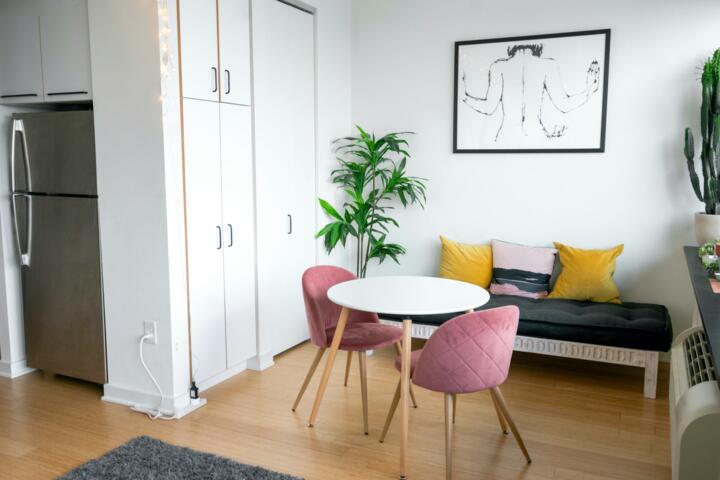
Small Space Living Basics
Small living spaces pose unique challenges that standard housing doesn’t. Studios or tiny houses often range between 200 to 400 square feet, demanding creative use of every corner. For instance, in cities like New York, nearly 37% of renters live in units smaller than 500 square feet. This phenomenon is partly due to rising urban prices and a shift in lifestyle preferences toward minimalism. A tiny home might combine kitchen, living, and sleeping areas all within a few hundred feet, requiring flexible design decisions.
Imagine a 350-square-foot studio: how do you fit a bed, workspace, and kitchen without clutter taking over? The answer lies in strategic planning. Many residents turn to loft beds, fold-out desks, or hidden storage under seating. Proper light and ventilation also redefine how spacious a small room feels.
Main Challenges Faced
Clutter is not the only enemy; misjudging storage needs can make a small space unbearable. Many assume that downsizing furniture automatically frees room, overlooking vertical space or non-obvious storage zones. Without these insights, people end up with cramped pathways or multi-functional zones that don’t work well.
Consider the psychological effect: crowded spaces reduce comfort and often correlate with higher stress. Sound echoes, and privacy diminishes. Sharing a 300-square-foot dwelling amplifies these problems—space becomes a daily negotiation.
Also, many underestimate maintenance time. Cleaning a tight area requires constant effort to avoid mess buildup, which can seem overwhelming unless streamlined. Not all small homes are designed for easy upkeep, especially if storage isn’t integrated well.
Solutions for Small Spaces
Optimize Vertical Storage
Store upward, not outward. Use shelving units that reach the ceiling or hanging organizers. This taps into 30% more usable space often ignored, especially in older buildings with high ceilings. Ikea’s IVAR system or Elfa customizable closets offer modular options that fit unusual corners or odd walls.
Choose Multi-Functional Furniture
Furniture with dual purposes reduces the footprint significantly. A sofa bed or an ottoman with storage harnesses function without extra bulk. IKEA’s BRIMNES bed with drawer units underneath, for example, provides about 6 cubic feet of hidden storage. Avoid pieces designed only for one use.
Implement Zonable Areas
Mark areas within a room visually or physically to create work, sleep, and leisure zones. A curtain, a rug, or a bookshelf can serve as a divider. This prevents the blurred function problem that leads to inefficiency and discomfort.
Employ Fold-Away Fixtures
Fold-away tables or wall beds keep floor space clear when not in use. The Murphy bed, an invention dating back to the early 1900s, remains a staple for tiny homes. Modern designs, like the Ori Systems automated walls, offer remote-controlled conversion that saves about 25 square feet on average.
Focus on Lighting and Airflow
Natural light makes small spaces feel bigger by 20 to 30%, according to studies. Fans or compact HVAC units prevent stuffiness that often accompanies tiny houses. LED strip lights under cabinets or around shelves provide ambient options without huge lamps.
Practice Selective Decluttering
Keep only items used frequently or with clear sentimental value. Adopt rules like “one in, one out” for clothes and kitchenware. Digitalize books and documents to reduce physical bulk. Apps like Sortly (version 5.4 released March 2024) help track possessions, but many skip such tech—another missed chance.
Use Mirrors Strategically
Mirrors don’t generate space but trick the eye, doubling perceived volume in real terms. Position them opposite windows or light sources. A tall mirror can add a feeling similar to an extra 20–30% of room size.
Employ Built-In Storage
Incorporate drawers under stairs, seating with compartments, or wall niches during construction or remodeling. While costly upfront, built-ins can save roughly $800 annually in utility bills by improving insulation and cutting clutter cleanup time.
Regularly Reassess Layout
Small space needs evolve. Rearrange furniture or repurpose areas every few months. Many ignore this step, leading to stale layouts that frustrate instead of serving new routines.
Small Space Experiences
A startup based in San Francisco redesigned their 350-square-foot apartment for remote work and restful living. They installed a wall bed and added vertical shelves reaching 8 feet high. The workspace includes a foldable desk and noise-blocking curtains. The result: a 40% increase in usable surface area during the day and better sleep quality according to employee survey.
In Portland, an elderly couple downsized to a 320-square-foot tiny house with custom storage under stairs and multi-use furniture from Cubiqz. They went from 1,200 square feet to less than a third but report feeling liberated and less burdened by maintenance. Their heating costs dropped by 35%, saving about $30 monthly.
Checklist: Small Space Setup
| Aspect | What to Check | Goal | Tools/Brands |
|---|---|---|---|
| Storage | Use vertical & hidden areas | Free floor space | Ikea, Elfa |
| Furniture | Pick multi-use items | Reduced clutter | BRIMNES (Ikea), Cubiqz |
| Zoning | Define functional zones | Boost comfort | Rugs, curtains |
| Lighting | Maximize natural light | Perceived space | LED strips |
| Decluttering | Regular purging of items | Maintain order | Sortly app |
Common Pitfalls to Avoid
One key mistake is ignoring the ceiling and floor edges for storage. Those are dead zones that steal potential. Another trap involves buying oversized or single-use furniture. It eats space and functionality simultaneously. Don't forget to measure pathways; narrow passages create bottlenecks and stress.
Many skip planning for ventilation or lighting. Small rooms get stuffy fast without airflow. Glaring artificial lights also tire eyes quickly. Finally, impatience with upkeep leads to clutter piling, and then it feels impossible to recover. Less stuff handled more often saves headaches.
FAQ
How to maximize storage in a studio?
Focus on vertical shelving and furniture with hidden compartments. Use wall hooks and ceiling-mounted racks for bulky items.
Is tiny house living affordable long-term?
Costs vary by location but lower utility and maintenance expenses often reduce overall expenses by 30% compared to average homes.
What furniture works best in a tiny space?
Multi-functional or foldable pieces, like Murphy beds or convertible tables, create flexibility without overcrowding.
How to keep a small living space uncluttered?
Regularly assess possession needs, digitize documents, and follow simple rules: discard, donate, or store smartly.
Are there apps to help with small space organization?
Yes. Apps like Sortly or Tody help inventory and maintain household items and cleaning schedules effectively.
Author's Insight
Having lived in a 320-square-foot studio for over five years, I discovered that no single hack fixes small space living. It’s a continuous process of prioritizing and adapting. The biggest win comes from accepting space limitations rather than fighting them. That mindset shift reduced my stress more than any storage system. Expect frustration; some furniture pieces don’t fit the way the manuals claim. But layering storage and light changes everything.
Key Takeaways
Small space living demands deliberate choices. Create vertical storage, pick adaptable furniture, and zone your limited area to match daily activities. Prioritizing natural light and airflow refreshes the environment and helps reduce perceived crowding. Regular decluttering maintains calm, while custom builds streamline storage long-term. Adjust your setup as life changes, because flexibility beats forcing a static layout. With these approaches, even under 400 square feet becomes a comfortable, functional home.