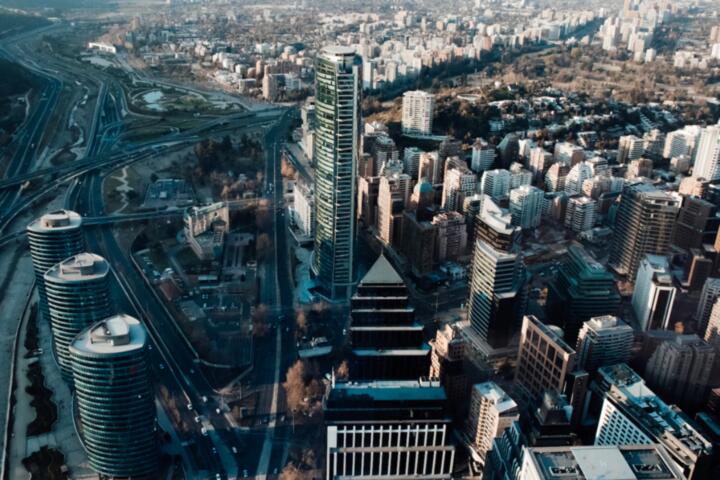
Strategic Hub Overview
Understanding South America’s value proposition requires looking past the "cheap" label and focusing on the ratio of infrastructure quality to monthly burn rate. While cities like Sao Paulo offer world-class amenities, their price point often rivals Southern Europe. True value-for-money hubs are those where the local economy supports a high standard of living for roughly $1,500–$2,200 per month.
In practice, this means having access to fiber-optic internet (300+ Mbps), a thriving "Third Wave" coffee culture for networking, and reliable public transit for under $0.50 per ride. For example, Medellin’s El Poblado was once the gold standard, but savvy travelers are now moving toward Laureles for a 20% reduction in rent with better walkability.
According to 2025 Numbeo data, consumer prices in cities like Cuenca or Buenos Aires are consistently 50-70% lower than in New York or London. Specifically, the rent index in Cordoba, Argentina, remains one of the lowest for a major educational and tech center in the Southern Hemisphere.
Relocation Errors
Many remote workers fail because they treat South America as a monolith, ignoring the hyper-local inflation rates and currency fluctuations. A major mistake is booking "gringo-priced" short-term rentals on global platforms rather than using local sites like Zonaprop in Argentina or Finca Raíz in Colombia, which can result in paying 300% above market value.
Poor logistical planning regarding "Mercosur" visa rules is another pitfall. Overstaying or failing to utilize the 90-day extensions can lead to permanent bans. Furthermore, relying solely on international credit cards without a strategy for local cash (like Western Union transfers in Argentina to access the "Blue" rate) can effectively double your expenses overnight.
Consider the "digital nomad bubble" effect. Staying exclusively in high-traffic zones like Lima’s Miraflores often leads to burnout due to high noise levels and inflated service costs. True value is found in the "Tier 2" neighborhoods—districts like Barranco’s outskirts or Santiago’s Barrio Italia—where the authentic local experience meets modern utility.
High-Value Recommendations
Leveraging Currency Arbitrage
In countries like Argentina, the gap between official and parallel exchange rates creates a massive advantage for those earning in USD or EUR. By using Western Union or crypto-to-cash P2P services (like Binance P2P), you can effectively cut your costs in half compared to using a standard ATM. This allows for a luxury lifestyle in Buenos Aires for the price of a budget hostel in Western Europe.
Prioritizing High-Altitude Value
Cuenca, Ecuador, is the ultimate value-for-money hub for those prioritizing stability and health. Because the economy is dollarized, you avoid currency volatility. High-speed internet is ubiquitous through providers like Puntonet. You can secure a modern 2-bedroom apartment in the Puertas del Sol area for $500, with a monthly grocery bill of $250 using local Ferias (open-air markets).
Navigating the Colombian Tech Scene
Medellin remains a powerhouse, but the value has shifted to the Laureles and Envigado districts. Use Selina for initial networking, but quickly transition to local coworking spaces like Semilla. Colombia’s "Estrato" system determines utility costs; living in an Estrato 4 or 5 area provides a perfect balance of safety and lower government-mandated utility pricing compared to the elite Estrato 6.
The Brazilian "Sun Belt" Strategy
Florianópolis (Floripa) offers a higher safety rating than Rio de Janeiro with better infrastructure. Focus on the Lagoa da Conceição area. While more expensive than the interior, the value lies in the "Silicon Beach" ecosystem. Using Pix, Brazil's instant payment system, is essential for avoiding card fees and getting local discounts at every vendor from street food to boutiques.
Uruguayan Tax Incentives
For high-earning freelancers, Uruguay offers a "Digital Nomad Permit" that is incredibly easy to obtain online. While Montevideo has a higher cost of living, the tax exemptions for foreign-sourced income make it a "value" play for those in high tax brackets. Use Mercado Pago for all local transactions to track spending and access integrated discounts.
Real-World Success Cases
Case 1: The Freelance Designer in Buenos Aires
A senior UI designer moved from San Francisco to the Palermo Soho district. By utilizing the "Blue Dollar" exchange rate and renting through local Facebook groups rather than Airbnb, they reduced monthly expenses from $4,500 to $1,400. They maintained a Starlink connection as a backup for regional outages, ensuring 99.9% uptime for client calls, resulting in a 70% increase in their annual savings rate.
Case 2: The E-commerce Team in Lima
A small team of three relocated to the Surco district in Lima. By hiring local administrative support via CompuTrabajo and utilizing Culqi for local payment processing, they tapped into the Peruvian market while keeping their primary operations in USD. They reported a 40% reduction in operational costs compared to their previous base in Mexico City, specifically citing lower commercial rent and utility costs.
Hub Comparison Matrix
| City Hub | Avg. Monthly Cost | Internet Speed (Avg) | Best Neighborhood | Primary Value Perk |
|---|---|---|---|---|
| Buenos Aires, AR | $1,200 - $1,500 | 100+ Mbps | Palermo Hollywood | Extreme Currency Arbitrage |
| Medellin, CO | $1,400 - $1,800 | 150+ Mbps | Envigado | World-class Networking |
| Cuenca, EC | $1,000 - $1,300 | 80+ Mbps | El Vergel | USD Stability & Safety |
| Florianópolis, BR | $1,700 - $2,100 | 200+ Mbps | Itacorubi | Safety & Tech Ecosystem |
| Santiago, CL | $1,800 - $2,300 | 300+ Mbps | Barrio Italia | Fastest Internet in LatAm |
Avoiding Practical Failure
The most frequent error is neglecting "Noise Pollution" in South American hubs. Value-priced apartments often face busy bus routes; always check the street on Google Street View for "Paraderos" (bus stops) before signing a lease. Additionally, ignore the "all-inclusive" nomad packages—they often mark up local services by 50% for the sake of convenience.
Never rely on a single bank. Carry a Revolut or Wise card for mid-market exchange rates, but always have a backup local bank account (like Nubank in Brazil) if you stay long-term. Failing to learn basic Spanish or Portuguese is a "hidden tax"—you will consistently be charged the "foreigner price" for everything from taxi rides to plumbing repairs.
FAQ
Is South America safe for remote workers?
Safety varies significantly by neighborhood, not just by city. Using apps like Citizen or local "Denuncia" maps helps identify safe zones. Generally, Tier 2 cities like Cuenca or Curitiba offer safety profiles similar to major US cities.
How do I handle the "Blue Dollar" in Argentina?
Avoid street changers. Use Western Union to send money to yourself; you get a rate very close to the unofficial market rate, which is legal and much safer than carrying large amounts of cash across borders.
Which city has the best internet for video calls?
Santiago, Chile, consistently ranks highest in the region for fixed broadband speeds. However, for the best value, Bogota and Medellin offer fiber-to-the-home (FTTH) in most modern apartment buildings.
Can I work on a tourist visa?
Most countries allow "passive" remote work on a tourist visa as long as you aren't employed by a local company. Colombia, Brazil, and Argentina now offer specific Digital Nomad Visas (DNV) for stays longer than 90–180 days.
What is the best way to find long-term housing?
Join local "Expats in [City Name]" groups on Facebook. Often, departing nomads look for someone to take over their lease, which avoids the heavy deposits and "garantía" (guarantor) requirements usually forced on foreigners.
Author’s Insight
In my five years traversing the Southern Cone, I’ve found that the "best value" isn't the lowest price—it's where the friction of daily life disappears. For me, that is Buenos Aires. While the economy is volatile, the cultural density and the ability to live a "European" lifestyle on a "Southeast Asian" budget is a unique window of opportunity that won't stay open forever. My advice: always keep $500 in physical USD "emergency cash" tucked away; in South America, cash is still the ultimate problem solver.
Summary
South America remains a premier destination for those looking to decouple their income from their cost of living. By focusing on "Tier 2" neighborhoods in hubs like Medellin, Buenos Aires, and Cuenca, and utilizing local tools like Pix, Wise, and local rental portals, you can achieve a high-standard lifestyle for a fraction of Northern Hemisphere costs. Start by selecting a hub that matches your currency comfort level, secure a short-term base in a residential "Estrato 4" area, and build a local network to unlock true regional value.