The Liquidity Spectrum
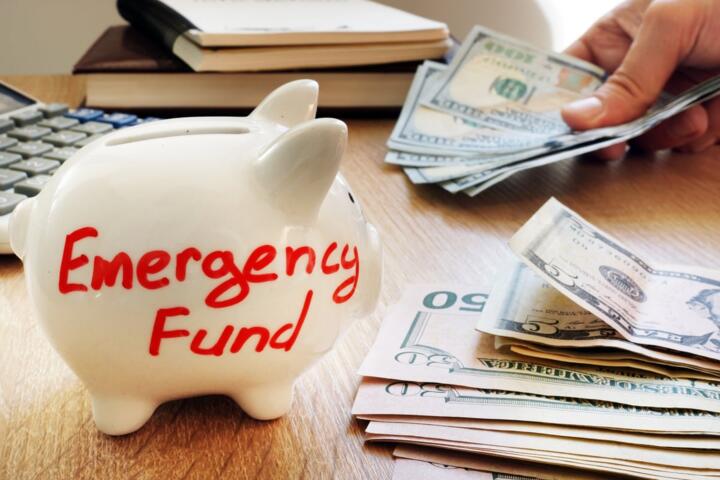
In the financial ecosystem, liquidity is your oxygen, while investment is your engine. An emergency fund is a non-negotiable pool of liquid assets—typically held in high-yield savings accounts (HYSAs) or money market funds—designed to cover 3–9 months of essential living expenses. It acts as a psychological and financial buffer, preventing you from liquidating long-term positions during market downturns.
Investment capital, conversely, is money "put to work" in volatile or illiquid vehicles like the S&P 500, REITs, or private equity. The goal here is to beat inflation and achieve compounding. A practical example: during the 2022 market correction, investors with robust cash reserves avoided selling their Vanguard Total Stock Market (VTI) holdings at a 20% loss, whereas those without reserves were forced to "sell the dip" to cover basic costs.
According to a 2023 Bankrate survey, 57% of Americans cannot cover a $1,000 emergency expense from savings. In professional wealth management, the "Liquidity Ratio" is a standard metric, suggesting that current liquid assets should be at least 2.5 times your monthly liabilities to ensure stability without sacrificing excessive growth.
The Cost of Imbalance
The most frequent error is the "All-in" fallacy, where investors chase 10% annual returns while carrying 20% APR credit card debt. This creates a fragile financial structure where a single job loss or medical bill collapses the entire investment strategy. When you lack a safety net, your "risk tolerance" is a myth; you are one broken boiler away from a forced exit of your best-performing assets.
Conversely, "Cash Drag" is the silent killer of wealth. Keeping $100,000 in a standard checking account earning 0.01% while inflation runs at 3-4% means losing thousands in purchasing power annually. Over 20 years, the opportunity cost of over-funding an emergency fund instead of holding a low-cost index fund can exceed $400,000, assuming a 7% average market return.
Real-world consequences often manifest in "tax-loss harvesting" gone wrong. If you are forced to sell stocks in a taxable brokerage account to pay for a car repair, you may trigger unwanted capital gains taxes or wash-sale rules, complicating your tax filing and reducing your net worth more than the repair itself cost.
Strategic Allocation
Optimizing Yield on Cash
Don't let your safety net sit idle. Utilize accounts like Marcus by Goldman Sachs or Betterment Cash Reserve, which currently offer rates upward of 4.25% to 5.00%. This ensures your "dead money" is at least keeping pace with the Consumer Price Index (CPI), preserving your buying power while remaining accessible within 24–48 hours.
The Tiered Reserve Method
Instead of a single bucket, use a tiered approach. Keep one month of expenses in a local checking account for instant access. Move the remaining 5 months into a Wealthfront bond ladder or a Series I Savings Bond. This maximizes interest while maintaining a staggered liquidity schedule, ensuring funds are never more than a few days away.
Automating the Split
Use "rules-based" banking. Many fintech apps like SoFi or Ally allow you to set "buckets." Direct 15% of your income to investments only after your "Emergency Bucket" reaches a specific ceiling. This removes emotional bias and ensures your foundation is built before you start adding the upper floors of high-risk speculation.
Assessing True Risk Levels
Your fund size should correlate with your "Replaceability Score." A tenured government employee might only need 3 months of expenses. A freelance consultant or a founder of a Series A startup needs 9–12 months. Calculate your monthly "Burn Rate" using tools like Rocket Money to get an objective number, then multiply by your risk factor.
Credit as a Secondary Tier
While not a replacement for cash, a Home Equity Line of Credit (HELOC) or a low-interest margin loan from Interactive Brokers can act as a "backup for the backup." This allows you to keep more capital invested in the market, knowing you have a low-cost credit line for catastrophic scenarios, provided you have the discipline to pay it back.
Mini-Case Examples
Case A: The Tech Professional. A software engineer at a mid-sized firm held $80,000 in a 0.05% savings account. After shifting $50,000 into a diversified portfolio (60/40 stocks/bonds) and moving the remaining $30,000 to a 4.5% HYSA, their passive income increased by $3,850 in the first year without increasing their perceived risk level.
Case B: The Small Business Owner. A boutique agency owner faced a 4-month client payment delay. Because they had maintained a "Business Emergency Fund" separate from their personal investments, they avoided taking a high-interest 18% SBA loan. The $45,000 reserve saved them approximately $6,000 in interest payments and kept their personal Schwab brokerage account untouched.
Asset Comparison
| Feature | Emergency Fund | Investment Capital |
|---|---|---|
| Primary Goal | Capital Preservation | Capital Appreciation |
| Liquidity | Immediate (0-2 days) | Delayed (5-30+ days) |
| Risk Profile | Near Zero | Moderate to High |
| Typical Vehicles | HYSA, Money Markets | Stocks, ETFs, Crypto, Real Estate |
| Tax Implications | Taxed as Income (Interest) | Capital Gains/Dividends |
Common Traps to Avoid
One major mistake is including "lifestyle" expenses in your emergency fund calculation. Your fund is for survival, not vacations. Use a "lean budget" for the calculation. If your monthly spending is $6,000 but $2,000 is discretionary (dining, Netflix, hobbies), your 6-month fund should be $24,000 ($4k x 6), not $36,000. This frees up $12,000 for immediate investment.
Another trap is "Lifestyle Creep" affecting the fund. As your salary increases, your emergency fund must grow proportionally. Review your totals every January. If your rent increased by 10%, your cash reserve is now 10% too small. Use apps like Personal Capital (Empower) to track your net worth and liquidity ratios in real-time to catch these gaps early.
FAQ
Should I pay off debt or build an emergency fund?
Prioritize a "starter" fund of $2,000 first to avoid new debt. Then, pivot to paying off high-interest debt (over 7%) using the "Avalanche Method" before fully funding a 6-month reserve. High-interest debt is a guaranteed negative return that usually outpaces market gains.
Can I use a Roth IRA as an emergency fund?
Technically, yes, because you can withdraw contributions (not earnings) tax-free at any time. However, this is a "last resort" strategy. Using a Fidelity or Vanguard Roth IRA for emergencies robs you of the tax-free compounding growth that makes these accounts valuable.
Where is the best place to keep a safety net?
A High-Yield Savings Account (HYSA) at an FDIC-insured online bank is the gold standard. It provides a higher interest rate than traditional "Big Banks" while keeping the money separate from your daily spending account, reducing the temptation to dip into it.
Is gold a good emergency fund asset?
No. Gold is volatile and illiquid. If you need cash on a Sunday afternoon for a burst pipe, you cannot easily spend a gold coin. Emergency funds should be in "nominal" currency values that do not fluctuate with market sentiment.
How often should I rebalance my cash vs investments?
Perform a "Liquidity Audit" bi-annually. If your investment portfolio has grown significantly, your "cash as a percentage of net worth" might have dropped too low. Rebalance by diverting dividends into your cash account until your safety threshold is restored.
Author’s Insight
In my fifteen years of navigating market cycles, I’ve observed that the most "successful" investors aren't those with the highest returns, but those with the most staying power. I personally maintain a "Barbell Strategy": I keep a very boring, very liquid 6-month cash reserve in a Treasury Direct account, which allows me to be incredibly aggressive with my remaining capital. When the market crashed in March 2020, I didn't feel a hint of panic because my "survival" was already paid for. That mental clarity is the ultimate dividend.
Summary
Balancing a safety net with investment capital is not a "set it and forget it" task; it is a dynamic process of risk management. Start by securing a high-yield home for your cash, calculate a lean survival budget, and then aggressively deploy surplus capital into diversified assets. True financial freedom is found when your liquidity gives you the patience to let your investments compound uninterrupted. Review your ratios today and ensure your engine has enough oxygen to run through any storm.